

 UP Live Time24x7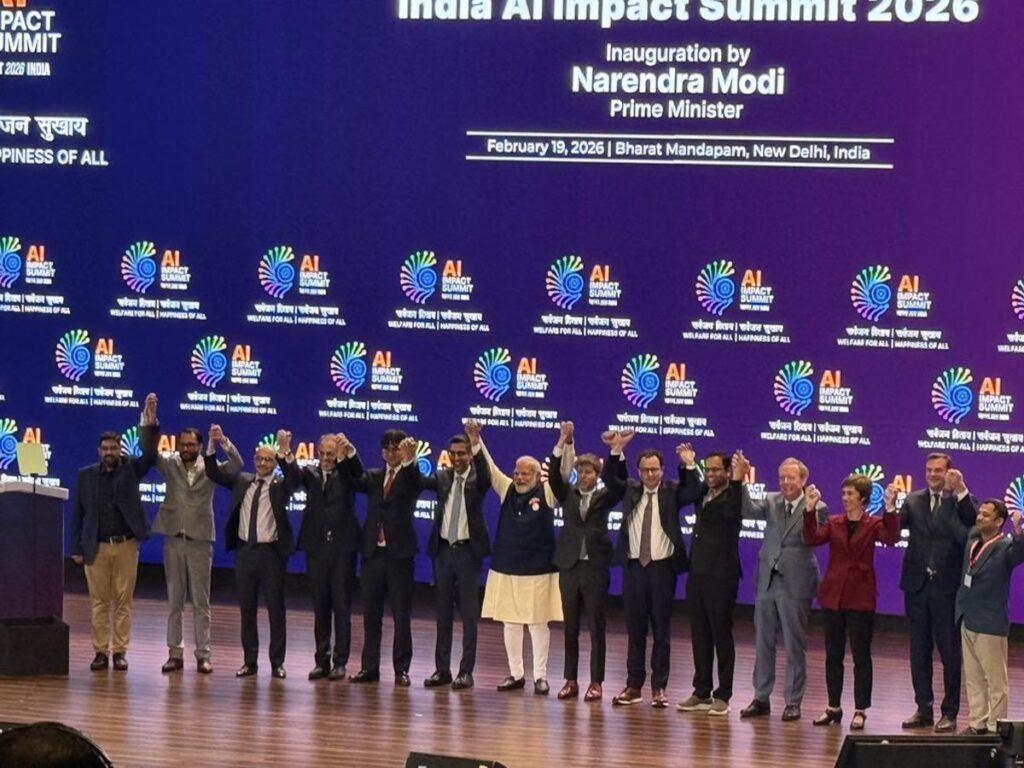
Syed Irfan Hashmi
New Delhi, February 21, 2026 – In a landmark move to reshape the global AI landscape, India is hosting the inaugural Global South AI Summit here in the national capital. Drawing leaders and delegates from 118 nations, predominantly from the developing world, the event underscores New Delhi’s vision of a technology driven future that leaves no one behind.

Prime Minister Narendra Modi inaugurated the summit with a powerful address, emphasizing a “human-centric roadmap for responsible AI.” Joined by global luminaries including Anthropic CEO Dario Amodei, Modi highlighted how AI must serve humanity’s diverse needs rather than entrenching existing inequalities. “AI should empower the Global South, not widen the chasm between the North and South,” the Prime Minister declared, setting the tone for two days of high-stakes deliberations.
Thursday’s sessions zeroed in on three pivotal themes: democratizing AI access, safeguarding children in the digital age, and tailoring technology to uplift developing economies. Experts dissected strategies to make cutting-edge tools like large language models affordable and adaptable for low-resource settings. Amodei, whose company pioneered safe AI systems, stressed ethical guardrails, warning that unchecked deployment could amplify biases against underrepresented populations.
A key focus was bridging the digital divide. Leaders from Africa, Latin America, and Southeast Asia shared stories of AI’s potential in agriculture, healthcare, and education—sectors where the Global South lags. Initiatives like open-source AI frameworks and subsidized data centers emerged as frontrunners, with India pledging seed funding for collaborative projects. Child protection took center stage too, with calls for global standards to combat deepfakes and online exploitation, ensuring AI enhances rather than endangers young lives.
The summit arrives at a critical juncture. As AI giants in the US and Europe dominate innovation, the Global South home to over 120 countries and billions of people risks being sidelined. India’s hosting role, bolstered by its own AI Mission and digital public infrastructure like UPI and Aadhaar, positions it as a natural leader. Delegates praised Modi’s push for “AI for All,” a mantra echoing through panel discussions on equitable governance and capacity building.
Yet challenges loom large. Concerns over data sovereignty, energy demands of AI training, and the talent exodus from emerging markets sparked heated debates. Solutions floated include sovereign AI clouds and international treaties modeled on nuclear non-proliferation pacts.
As the summit progresses into its second day, expectations run high for concrete outcomes a Global South AI Charter, perhaps, or a joint fund for ethical AI research. India’s bold step signals a multipolar tech order, where innovation flows from Delhi to Dakar, not just Silicon Valley. In this human-centric vision, the Global South isn’t just catching up; it’s redefining the game.